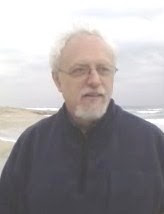
Last Sunday the President of Interfaith Paths to Peace delivered a stirring homily on the topic of compassion. His words were part of an interfaith service at the conclusion of the national convention in Louisville of The National Coalition to Abolish the Death Penalty (NCADP). The service was designed by IPP and was co-hosted by IPP and the NCADP.
We thought we would share Don's eloquence with you. Here is the text of his homily:
Compassion
How Do We Enlarge the Great Circle of Compassion?
A Homily Prepared for Delivery
January 17, 2010
National Coalition to Abolish the Death Penalty Annual Meeting
Louisville, KY
By: Donald Vish
***
Thank you for staying for this part of the program--the homily. All the religions of the world agree on one thing for sure: there’s no thief worse than a bad sermon. So special thanks to each of you for your trust and your faith in remaining in this room.
When I was first asked to preach a homily on compassion I said "No. I am willing to preach to the choir but I'm not willing to preach to the pope. What can I possibly say about compassion to an audience that's got Sister Helen and my patron saint Bud Welsh in it? The only thing Sister Helen is going to like about me is that I don't talk with an accent." So, "No way" I said.
Have any of you every tried to tell Fr. Pat "No." (Patrick Delahanty is the chair of the Kentucky Coalition to Abolish the Death Penalty and a lobbyist for the Catholic Conference). Well try it and you'll learn why he is such a successful lobbyist in Frankfort.
So, here I am. My invitation to speak so to speak included specific instructions to answer the question:
How Do We Enlarge the Great Circle of Compassion?
I’m going to answer that question. I’m just not going to answer it very quickly. I wouldn’t be a very good preacher if I got to the point too soon.
The Golden Rule: (Say it. You know the words): do unto others as you would have others do unto you.
That’s a good rule of good sense. It’s valuable as a cornerstone of justice. It’s a solid metric for fairness. It’s true in the same way it’s true to say: whoever smiles will always have a reason to smile.
But the Golden Rule is not an expression of compassion.
First, it affirms otherness, thee and me that leads to thine and mine. Secondly, it is ever so slightly animated with self-interest expressing in Elizabethan language what the 3-card Monte dealer says more plainly about the arc of justice: what goes around comes around.
Plato’s dictum comes closer to compassion: be kind, everyone you meet is fighting a hard battle.
Plato’s sermon is built on empathy not compassion. Empathy is based on perception, understanding. Empathy is neither sympathy nor pity each of which relates to the adverse impact someone else’s suffering has on us! Sympathy means ‘fellow feeling’ and requires a certain degree of equality. Pity, on the other hand, regards its object as weak and hence as inferior. We have place in Kentucky we call down home. Everybody knows where it is. Down home they like to say pity don't cost nothing 'cause pity ain't worth nothing.
Compassion is the selfless disposition to relieve human suffering. It soars above empathy and sympathy and pity. Compassion is the noblest trait of human nature. Dante would call it caritas, pure love with no expectation of a quid pro quo.
Make no mistake: many good works are built on the Golden Rule, on empathy, on sympathy, on pity and on lesser motives like fame and glory and vanity and self-interest. They all count. But compassion is in a class by itself.
When General Agamemnon was ready to launch 1000 ships to invade Troy, he had two problems: the first one is so typical of blood vengeance—no one knew how to get to Troy. They attacked the wrong country.
Blood vengeance is always ready to act before its ready to act. Vengeance never misses an opportunity to miss an opportunity. It is ever and always aimless and misdirected even though its arc is predictable and certain: it comes around then goes around.
Like Macbeth’s vaulting ambition, vengeance o’erleaps itself and then falls on itself.
Agamemnon’s second problem was the lack of wind. The ships could not sail. The man had 1000 sai boats and no wind. So he made a bargain with the gods—he sacrificed his daughter for a favorable breeze. Then the ships sailed for Troy and war began.
Agamemnon’s murder of his daughter ensured that he would return home from war to more war. Under the law of blood vengeance, his daughter’s mother was obligated to murder him—and she did; and under the law of blood vengeance her son was obligated to murder her—and he did; and under the law of blood vengeance, her daughter was obligated to murder her brother…and so it goes.
The arc of vengeance is as sure and as certain as the laws of mathematics: a series ending where it begins, and repeating itself. Those words are the dictionary definition of a circle—as well as a complete treatise on blood vengeance.
Like a pebble dropped into a pond, vengeance sends out ripple after ripple each extending its sphere until it runs out of space or spends itself.
Vengeance is a circle. A circle delineates, it defines and separates the inside from the outside. The circle is closed. Any segment of a circle is a curved line.
In architecture, a curved line is pretty but it’s weak. Leonardo reflected on the weakness of curved lines and made an astounding observation: two curved lines when propped up against each other form an arch: one of the strongest formations in architecture. So an arch is a strength created by two weaknesses.
Here’s the answer to the question—enlarge the circle of compassion by never closing it.
Keep the circle open. Reach out, join hands with one another in a tangible display of unity, solidarity and connectedness; but let those on each end extend an open hand to the world at-large as an invitation to others to join hands.
Let the circle of compassion be like Leonardo’s arch, a strength comprised of many weaknesses.
We thought we would share Don's eloquence with you. Here is the text of his homily:
Compassion
How Do We Enlarge the Great Circle of Compassion?
A Homily Prepared for Delivery
January 17, 2010
National Coalition to Abolish the Death Penalty Annual Meeting
Louisville, KY
By: Donald Vish
***
Thank you for staying for this part of the program--the homily. All the religions of the world agree on one thing for sure: there’s no thief worse than a bad sermon. So special thanks to each of you for your trust and your faith in remaining in this room.
When I was first asked to preach a homily on compassion I said "No. I am willing to preach to the choir but I'm not willing to preach to the pope. What can I possibly say about compassion to an audience that's got Sister Helen and my patron saint Bud Welsh in it? The only thing Sister Helen is going to like about me is that I don't talk with an accent." So, "No way" I said.
Have any of you every tried to tell Fr. Pat "No." (Patrick Delahanty is the chair of the Kentucky Coalition to Abolish the Death Penalty and a lobbyist for the Catholic Conference). Well try it and you'll learn why he is such a successful lobbyist in Frankfort.
So, here I am. My invitation to speak so to speak included specific instructions to answer the question:
How Do We Enlarge the Great Circle of Compassion?
I’m going to answer that question. I’m just not going to answer it very quickly. I wouldn’t be a very good preacher if I got to the point too soon.
The Golden Rule: (Say it. You know the words): do unto others as you would have others do unto you.
That’s a good rule of good sense. It’s valuable as a cornerstone of justice. It’s a solid metric for fairness. It’s true in the same way it’s true to say: whoever smiles will always have a reason to smile.
But the Golden Rule is not an expression of compassion.
First, it affirms otherness, thee and me that leads to thine and mine. Secondly, it is ever so slightly animated with self-interest expressing in Elizabethan language what the 3-card Monte dealer says more plainly about the arc of justice: what goes around comes around.
Plato’s dictum comes closer to compassion: be kind, everyone you meet is fighting a hard battle.
Plato’s sermon is built on empathy not compassion. Empathy is based on perception, understanding. Empathy is neither sympathy nor pity each of which relates to the adverse impact someone else’s suffering has on us! Sympathy means ‘fellow feeling’ and requires a certain degree of equality. Pity, on the other hand, regards its object as weak and hence as inferior. We have place in Kentucky we call down home. Everybody knows where it is. Down home they like to say pity don't cost nothing 'cause pity ain't worth nothing.
Compassion is the selfless disposition to relieve human suffering. It soars above empathy and sympathy and pity. Compassion is the noblest trait of human nature. Dante would call it caritas, pure love with no expectation of a quid pro quo.
Make no mistake: many good works are built on the Golden Rule, on empathy, on sympathy, on pity and on lesser motives like fame and glory and vanity and self-interest. They all count. But compassion is in a class by itself.
When General Agamemnon was ready to launch 1000 ships to invade Troy, he had two problems: the first one is so typical of blood vengeance—no one knew how to get to Troy. They attacked the wrong country.
Blood vengeance is always ready to act before its ready to act. Vengeance never misses an opportunity to miss an opportunity. It is ever and always aimless and misdirected even though its arc is predictable and certain: it comes around then goes around.
Like Macbeth’s vaulting ambition, vengeance o’erleaps itself and then falls on itself.
Agamemnon’s second problem was the lack of wind. The ships could not sail. The man had 1000 sai boats and no wind. So he made a bargain with the gods—he sacrificed his daughter for a favorable breeze. Then the ships sailed for Troy and war began.
Agamemnon’s murder of his daughter ensured that he would return home from war to more war. Under the law of blood vengeance, his daughter’s mother was obligated to murder him—and she did; and under the law of blood vengeance her son was obligated to murder her—and he did; and under the law of blood vengeance, her daughter was obligated to murder her brother…and so it goes.
The arc of vengeance is as sure and as certain as the laws of mathematics: a series ending where it begins, and repeating itself. Those words are the dictionary definition of a circle—as well as a complete treatise on blood vengeance.
Like a pebble dropped into a pond, vengeance sends out ripple after ripple each extending its sphere until it runs out of space or spends itself.
Vengeance is a circle. A circle delineates, it defines and separates the inside from the outside. The circle is closed. Any segment of a circle is a curved line.
In architecture, a curved line is pretty but it’s weak. Leonardo reflected on the weakness of curved lines and made an astounding observation: two curved lines when propped up against each other form an arch: one of the strongest formations in architecture. So an arch is a strength created by two weaknesses.
Here’s the answer to the question—enlarge the circle of compassion by never closing it.
Keep the circle open. Reach out, join hands with one another in a tangible display of unity, solidarity and connectedness; but let those on each end extend an open hand to the world at-large as an invitation to others to join hands.
Let the circle of compassion be like Leonardo’s arch, a strength comprised of many weaknesses.